System Architecture and Core Components
The Trading Battle platform is built on an advanced, scalable, three-layer architecture. This design ensures secure gameplay, efficient management of TBT token transactions, user behavior analytics, and seamless interaction with the blockchain.
System Layers
Application Layer
- Primary Responsibilities: Delivering advanced user experience (UX/UI), real-time market data visualization, user interaction management, and educational content delivery.
- Subsystems:
- Game Engine: Manages all game modes (Simple Duel, Fast Duel, Death Duel, Tournament), game timing, and rules enforcement.
- User Interface: Dashboard, user profiles, chart visualization, and notifications.
- Educational Module: Interactive training modules and quizzes for financial literacy.
- Analytics SDK: Collects user interaction data to optimize experience and provide intelligent suggestions.
- Key Features: High responsiveness, customizable user experience, integration with social platforms, and seamless TBT token interaction.
Protocol Layer
- Primary Responsibilities: Managing transactions, storing and synchronizing data between users and the blockchain.
- Subsystems:
- Transaction Manager: Records and validates all transactions (stakes, wins/losses, rewards) in accordance with tokenomics.
- Event Processing Engine: Processes in-game events and TBT token events, sending notifications to the Application Layer.
- Data Storage & Caching: NoSQL databases for real-time data and blockchain storage for immutable transaction records.
- Consensus Integration: Supports PoS or PoA consensus mechanisms to record transactions efficiently on the blockchain.
- Key Features: Ensures data consistency, low-latency transaction processing, horizontal scalability, and high availability.
Infrastructure Layer
- Primary Responsibilities: Providing the network and hardware resources for secure and scalable system operations.
- Subsystems:
- Blockchain Nodes: Nodes to record transactions and execute smart contracts.
- Network & Load Balancer: Manages communication between users, protocol layer, and blockchain nodes.
- Containerized Services: Runs services using Docker/Kubernetes for scalability and fault tolerance.
- Security & Monitoring: AES encryption for stored data, RSA signatures for transaction verification, multi-factor authentication, and node monitoring.
- Key Features: Fault tolerance, network security, scalable node deployment, and high system availability.
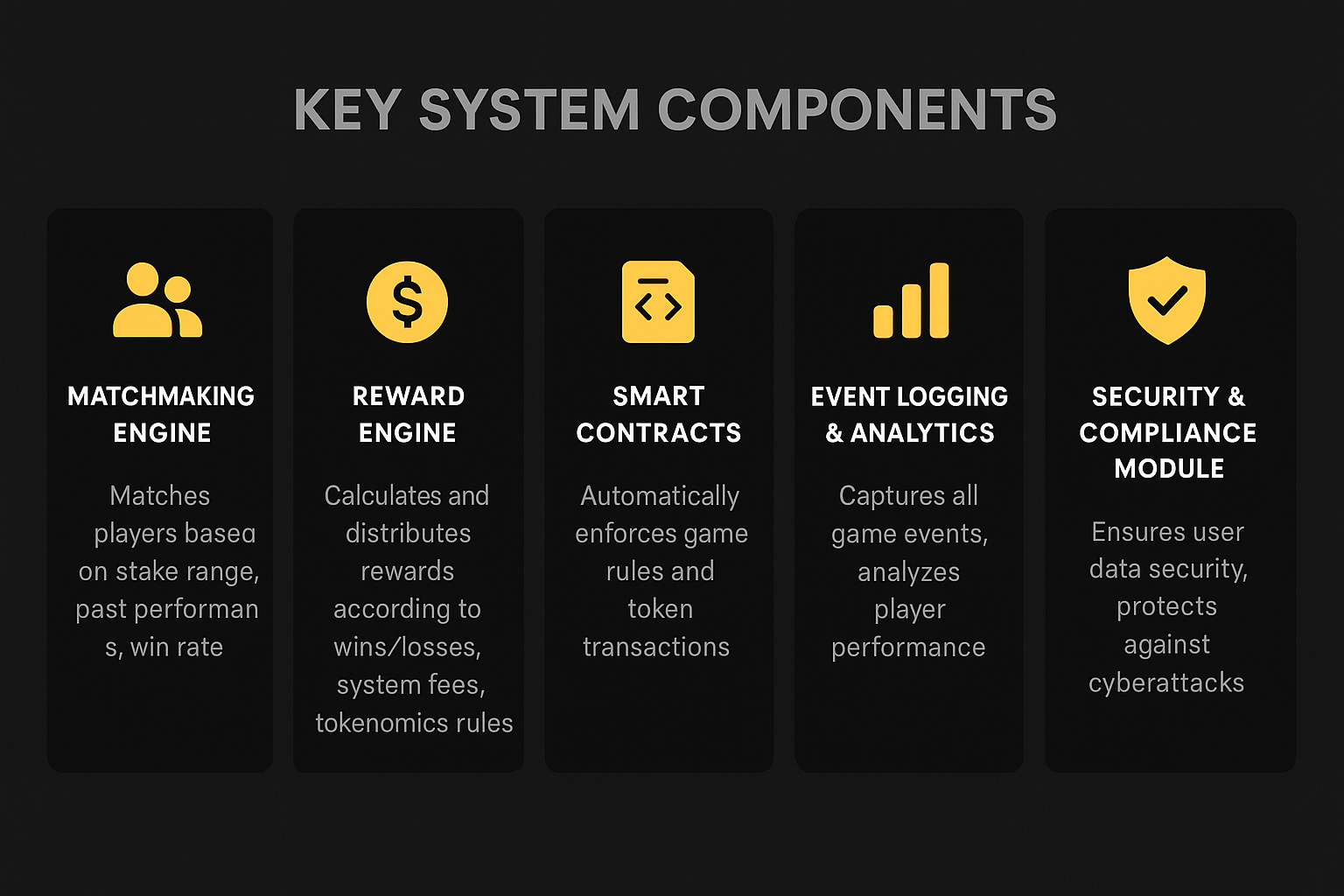
Key System Components
1. Matchmaking Engine
- Description: Matches players based on TBT stake range, past performance, and win rate.
- Features: Smart matching algorithms, queue management, and smooth user experience.
2. Reward Engine
- Description: Calculates and distributes rewards according to wins/losses, system fees, and tokenomics rules.
- Features: Full transparency, automatic blockchain recording, and support for expandable reward models.
3. Smart Contracts
- Description: Automatically enforces game rules and TBT token transactions on the blockchain.
- Features: Anti-cheating, exact execution of rules, immutable transaction logging, DAO support, and token governance.
4. Event Logging & Analytics
- Description: Captures all game events, analyzes player performance, and generates management reports.
- Features: Reliable data for player behavior analysis, algorithm optimization, and managerial insights.
5. Security & Compliance Module
- Description: Ensures user data security, protects against cyberattacks, and maintains regulatory compliance for cryptocurrencies.
- Features: Data encryption, multi-factor authentication, real-time monitoring, and protection against manipulation or DDoS attacks.
Data Flow Overview
- The player joins a game and selects a game mode and TBT stake.
- The Matchmaking Engine finds suitable opponents.
- TBT transactions are recorded and validated by the Transaction Manager.
- Game outcomes are executed via Smart Contracts and permanently logged.
- The Reward Engine calculates and distributes rewards.
- All events are logged via the Event Logging System for analysis and algorithm improvement.
- The Infrastructure Layer ensures all transactions are secure, fault-tolerant, and highly available.