Problem Statement – Comprehensive Investor-Friendly Version
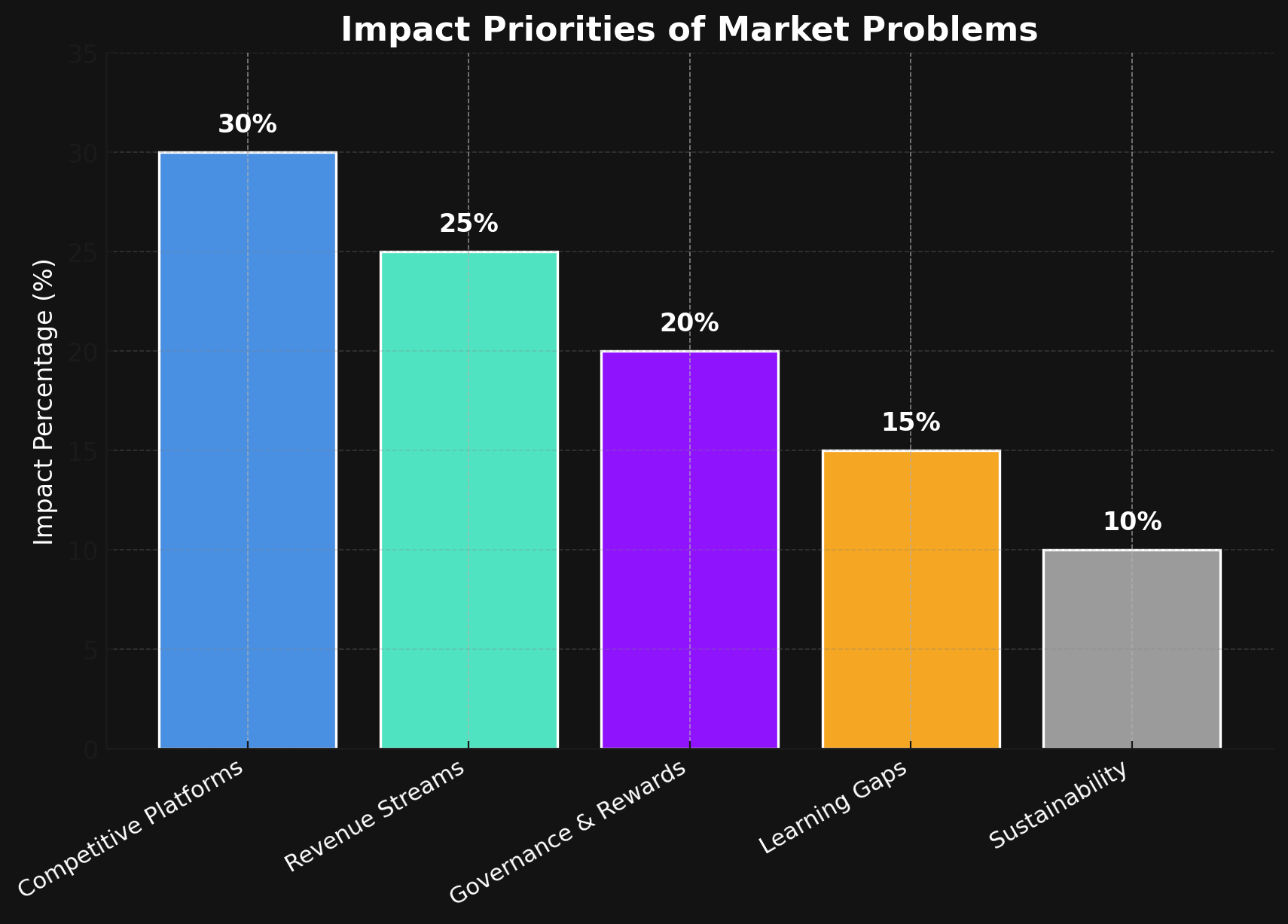
The GameFi and online trading markets are growing rapidly, but they face multiple critical challenges that hinder player engagement, sustainable growth, and fair competition.
1. Absence of Competitive Platforms with Balanced Tokenomics
- Most existing platforms are either casual or single-player focused, offering limited opportunities for skill-based competition.
- Token economies are often imbalanced, with excessive inflation or poorly structured reward systems, eroding trust and discouraging long-term engagement.
2. Limited Revenue Streams for Users
- Users often struggle to generate meaningful income beyond basic rewards or staking.
- Lack of diverse earning opportunities, such as tournaments, duels, and achievement-based incentives, reduces retention, particularly for highly skilled players.
3. Complexity in Governance and Reward Management
- Many platforms suffer from opaque governance systems, leaving users unsure how rewards are calculated or distributed.
- Non-transparent reward systems can cause disputes and reduce trust in competitive outcomes.
4. Fragmented Learning and Skill Development Pathways
- Education and skill-building are rarely integrated into gameplay, leaving users to learn by trial and error.
- Beginners and intermediates often lack structured guidance, slowing their path to mastery.
5. Lack of Long-Term Ecosystem Sustainability
- Many GameFi models focus on short-term engagement, with tokenomics and reward structures that are not designed for longevity.
- Without a sustainable economic framework, platforms face declining user activity and diminished confidence in competition fairness and token value.
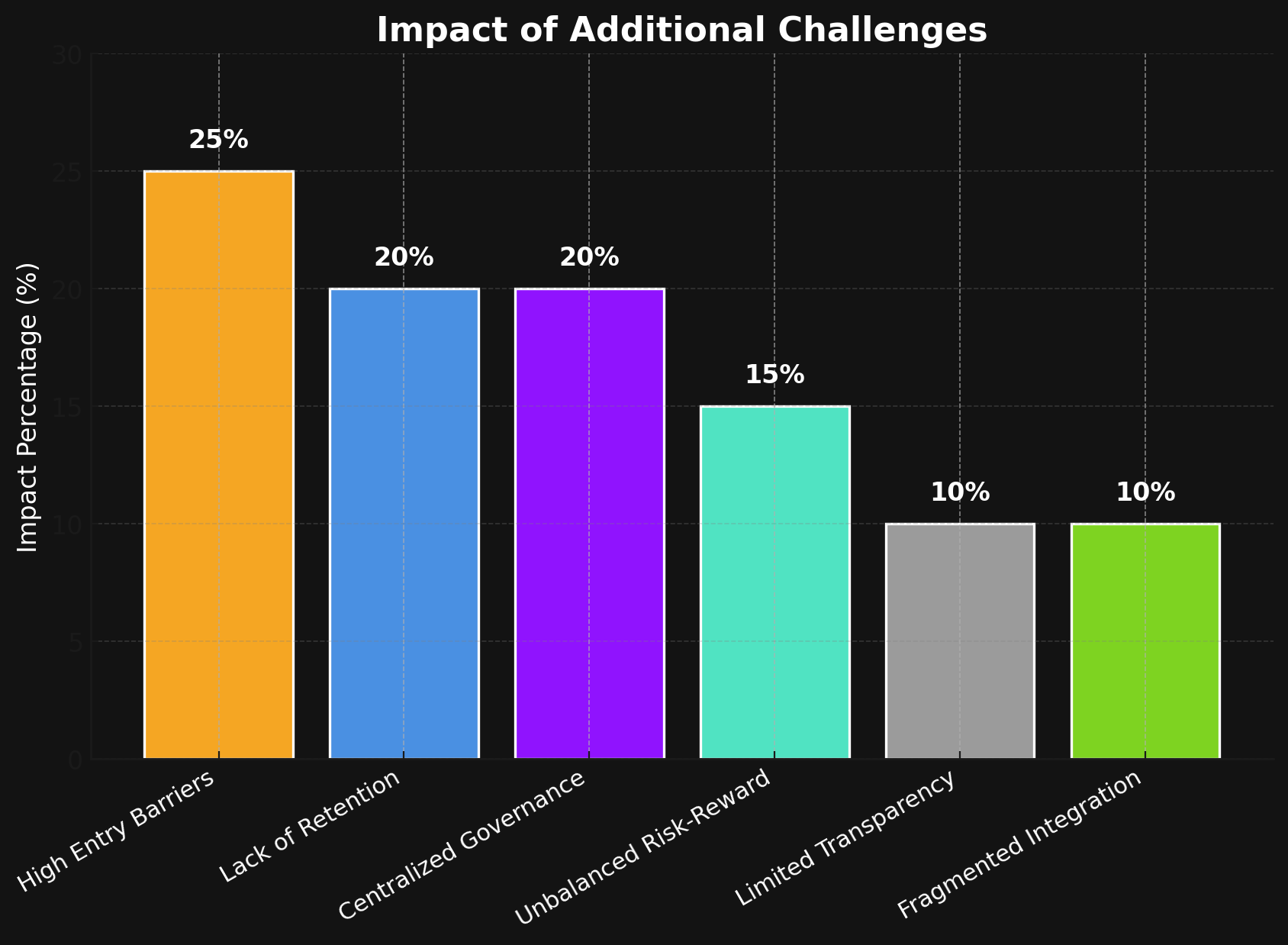
Additional Challenges
6. High Entry Barriers for Beginners
- Complexity and steep learning curves discourage early adoption and community growth.
7. Lack of Player Retention Mechanisms
- Platforms often fail to keep users engaged long-term without progressive challenges or tournaments.
8. Centralized Decision-Making and Limited Governance
- Users have little say in platform governance, reducing trust and community ownership.
9. Unbalanced Risk-Reward Structures
- Over-rewarding low-skill actions or under-rewarding high-skill achievements frustrates skilled players and lowers competitive incentives.
10. Limited Transparency in Game Mechanics
- Players cannot always track how outcomes are determined, which undermines confidence in fairness.
11. Fragmented Ecosystem Integration
- Users often need multiple platforms for education, trading simulation, and rewards, reducing efficiency and satisfaction.
The current GameFi and online trading landscape struggles to provide:
- Fair, skill-based competitive experiences with meaningful rewards
- Balanced, sustainable token economies
- Transparent governance and reward distribution
- Integrated education and structured skill development
- Long-term ecosystem sustainability
- Engaging and accessible experiences for all skill levels
Trading Battle addresses these challenges by combining competitive trading, balanced tokenomics, educational gamification, and transparent reward governance into a single, cohesive platform—designed for skill, fairness, engagement, and sustainable growth.