Advanced Economic Simulation
A sophisticated economic simulation is at the core of our platform’s financial and gameplay ecosystem. By modeling token emissions, market conditions, and dynamic reward systems, we aim to provide a realistic and engaging experience for users while ensuring long-term token sustainability.
1. Token Emission Curve Formulas
- Controlled Supply: The platform implements precise mathematical models to control the rate of token emission, ensuring stability and predictability in token supply.
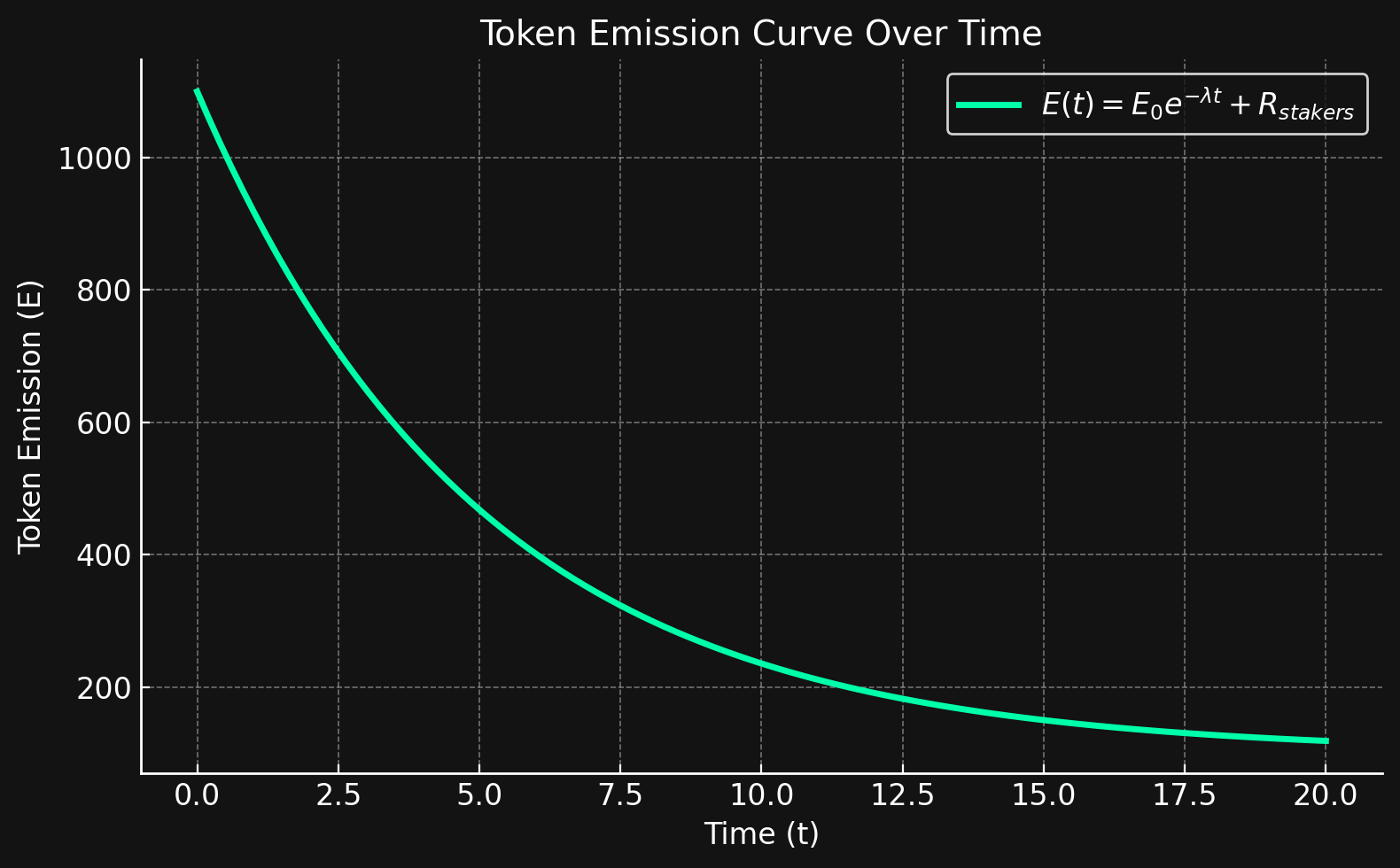
- Emission Phases: The TBT token follows a tiered emission schedule with different phases, such as initial airdrops, early-game incentives, and long-term staking rewards. Each phase has a formula that defines how many tokens enter circulation over time.
- Halving & Deflationary Adjustments: Periodic halving or supply adjustments are integrated into the emission formulas to counter inflationary pressures and maintain scarcity, encouraging long-term value retention.
- Mathematical Example:
Where:
- — token emission at time
- — initial emission rate
- — decay constant
- — rewards allocated to staking participants
2. Bull/Bear Market Simulations
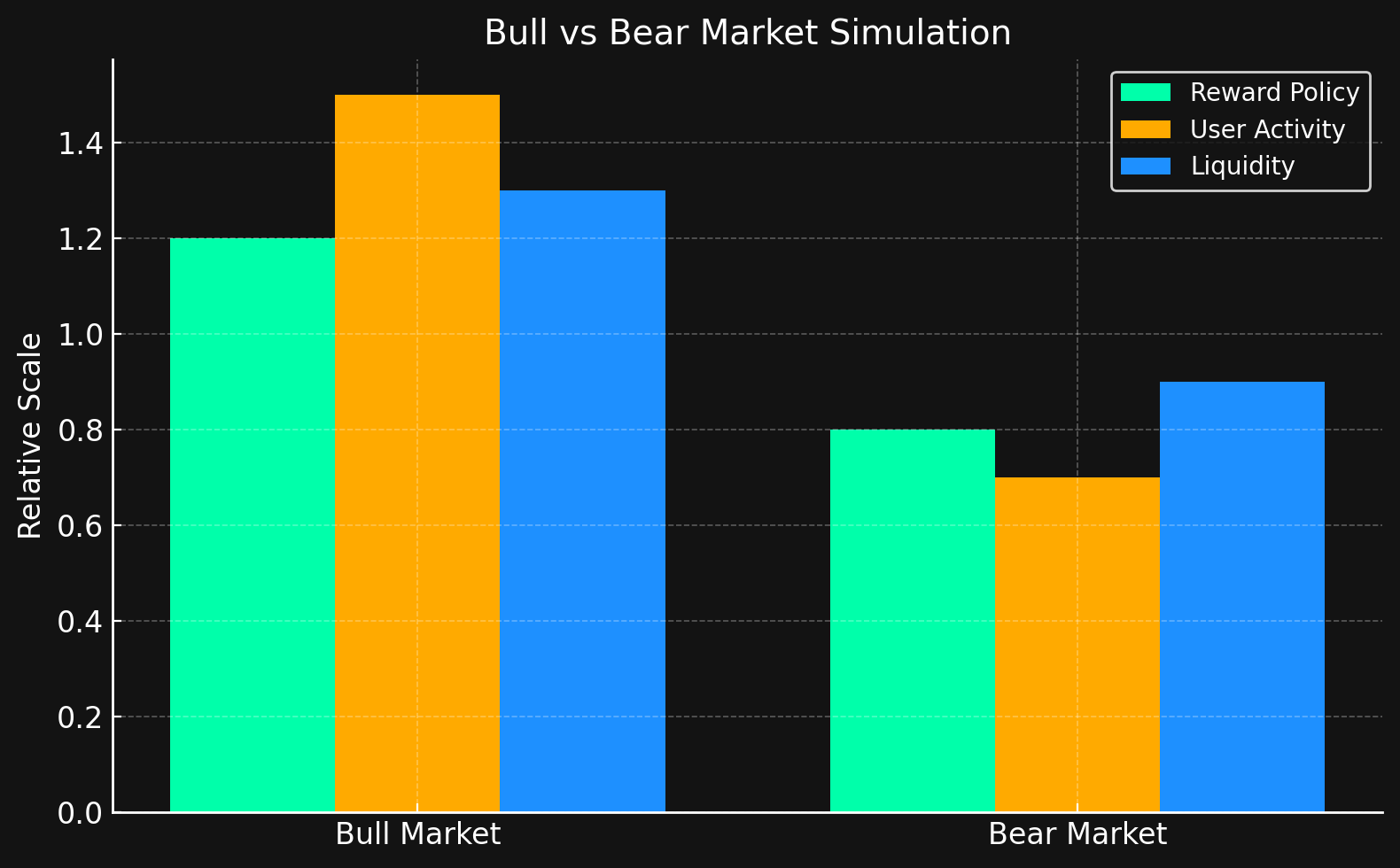
- Scenario Modeling: The platform simulates different market conditions, including bullish and bearish trends, to analyze the effect on token circulation, staking rewards, and player behavior.
- Adaptive Responses: Economic models dynamically adjust incentives based on market conditions. For example:
- During bull markets, rewards may be moderately increased to encourage trading and participation without overheating the system.
- During bear markets, rewards are strategically adjusted to maintain liquidity and engagement while discouraging panic exits.
- User Experience: These simulations create a more realistic trading and gaming environment, preparing players for real-world market dynamics.
3. Dynamic Reward & Deflationary Modeling
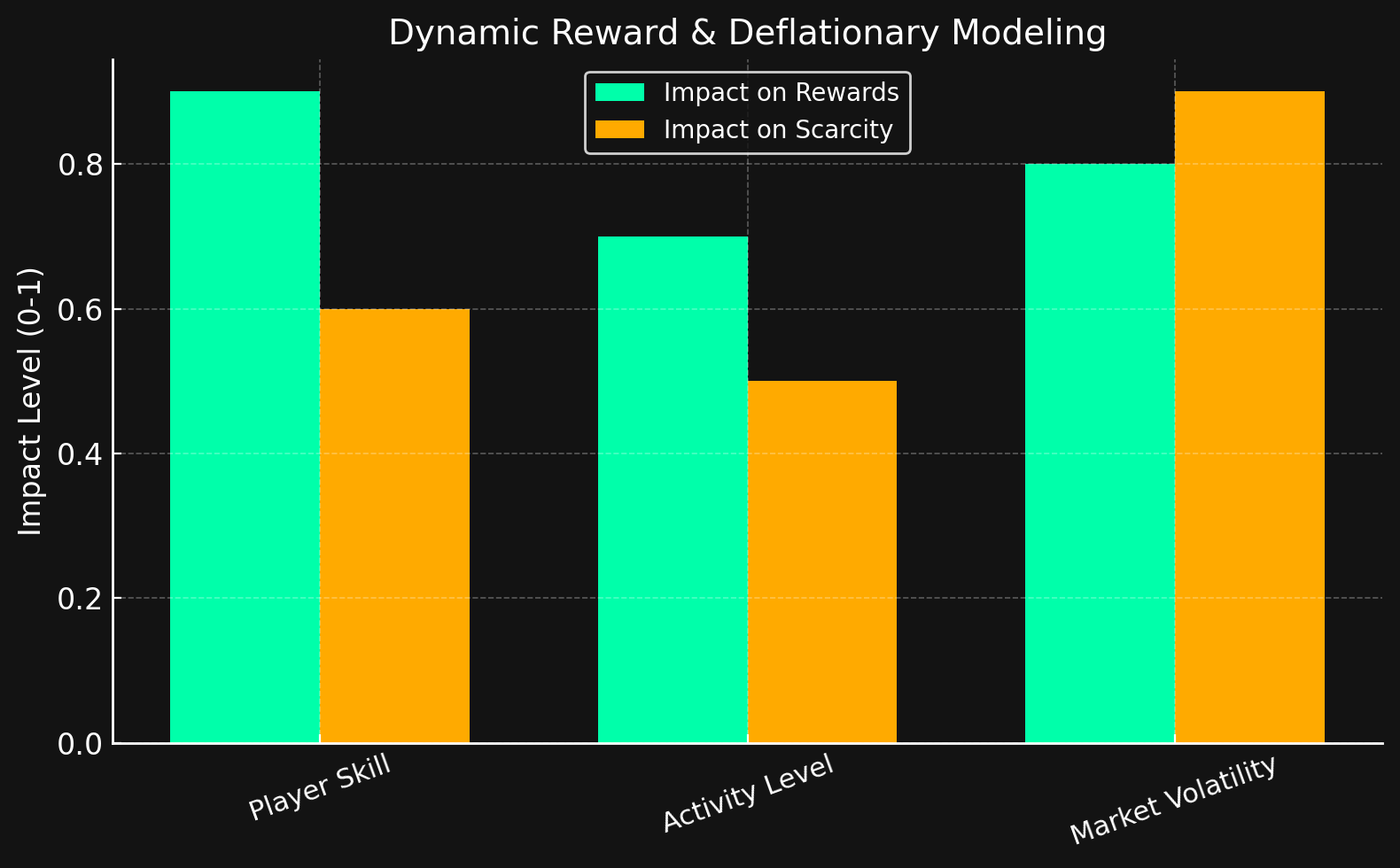
- Performance-Based Rewards: Rewards are not static; they are adjusted based on player performance, engagement, and market conditions. Higher skill levels or risk-taking can yield higher returns, while inactivity or poor decisions reduce rewards.
- Deflationary Mechanics: To maintain token scarcity and long-term value, a portion of transaction fees and in-game expenditures are burned systematically.
- Elastic Reward Pools: Reward pools expand or contract based on system-wide metrics such as total staked TBT, player activity, and market volatility.
- Simulation Integration: Economic simulations incorporate these dynamic models to test outcomes under various hypothetical scenarios, helping developers fine-tune reward systems and prevent unintended inflation or deflation.
4. Long-Term Economic Stability
- Predictive Analytics: Advanced simulation tools provide predictive insights on token supply, reward sustainability, and market reactions to game updates or events.
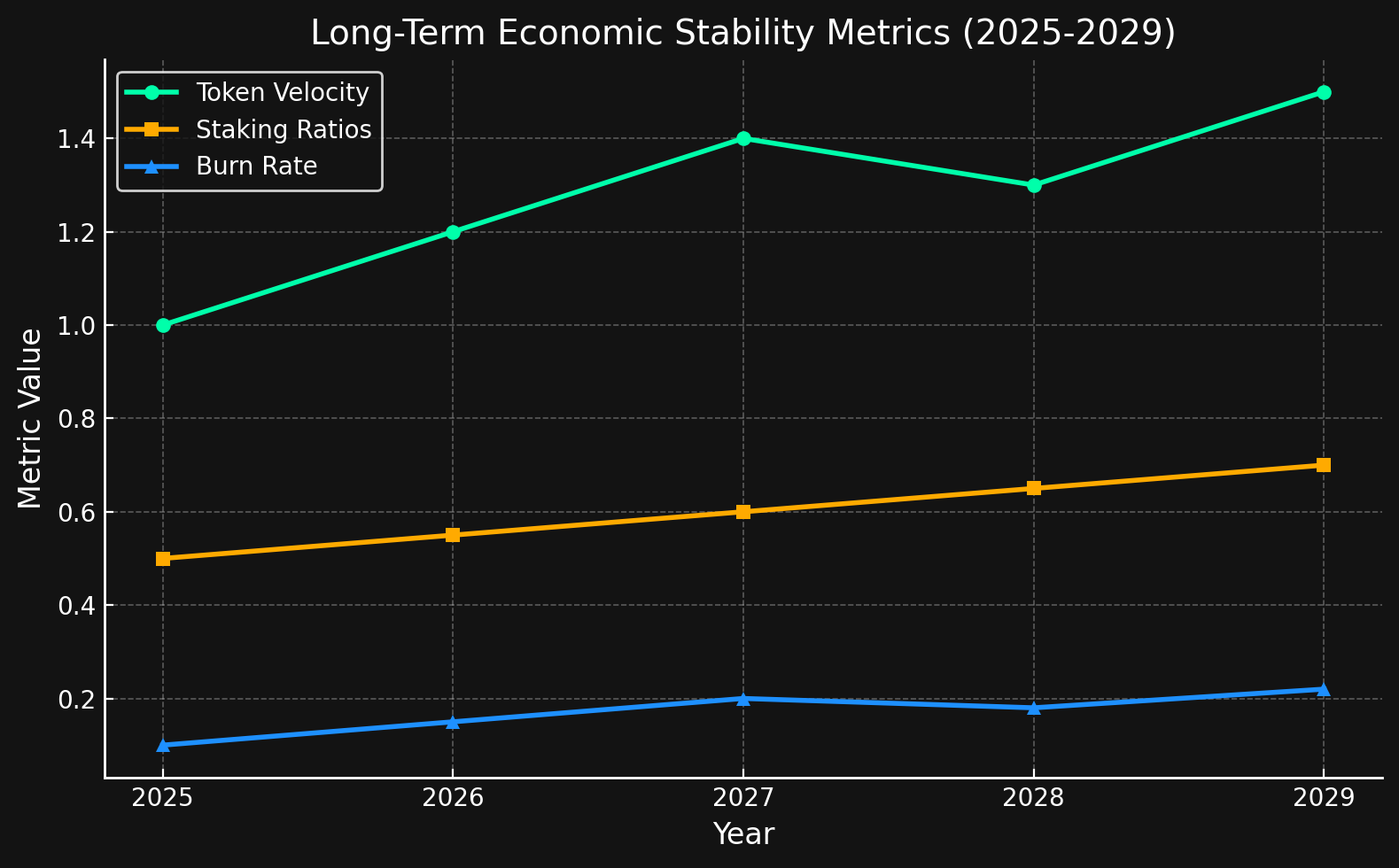
- Sustainability Metrics: Metrics such as token velocity, staking ratios, and reward distribution efficiency are continuously monitored to ensure healthy economic conditions.
- Governance Integration: Token holders and DAO participants can vote on proposed economic changes, informed by simulation results, ensuring a community-driven approach to sustainable growth.